

A WELCOMING HOME PSYCHOTHERAPY
Therapy for Stress
and Burnout
in Toronto & Virtually Across Ontario
Helping you move out of survival mode, heal from burnout, and build a life that feels more balanced, grounded, and sustainable.
Feel Calmer and More Grounded
Understand Why You Feel This Way
Gain Tools & Strategies for Lasting Change
Learn to Prioritize Yourself Again

You deserve to feel more at ease in your own life.
Maybe you’ve been carrying stress for so long that it has started to feel normal. You’re still showing up, getting things done, and caring for others - but underneath it all, you feel overwhelmed, exhausted, or like you can never fully switch off. You might find yourself constantly thinking about what needs to happen next, struggling to slow down, or feeling like you’re always “on.”
Together, we’ll explore what’s contributing to your stress, build healthier ways to cope, and help you create more balance, calm, and space to reconnect with yourself.
You may be carrying more stress than you realize
From the outside, others may see you as responsible, capable, and someone who handles things well. But internally, you might be carrying a constant weight of pressure, worry, or exhaustion.
It may sound like:
“I’m exhausted, but I don’t know how to slow down”
“I feel like I’m always behind, no matter how much I get done”
“I can’t remember the last time I actually felt rested”
“I know I need a break, but I don’t know how to take one without feeling guilty”
“I feel like I’ve been holding everything together for so long that I don’t know how to stop”
“I’m mentally and emotionally exhausted, and it’s starting to affect everything”
“Even small things feel overwhelming lately”
“I feel like I’m always ‘on’ and can’t seem to switch off”
“I’m getting everything done, but I’m running on empty”
“I don’t have the energy for the things that used to matter to me”
Over time, chronic stress can leave you feeling disconnected, overwhelmed, and like you’re simply getting through the day. Therapy can help you understand what’s underneath the stress, find ways to care for yourself without adding another thing to your list, and begin creating more space to breathe.

Stress Therapy Can Help You Move Toward Greater Calm and Balance
-
Stress can leave you stuck in cycles of replaying conversations, worrying about what could go wrong, or feeling consumed by racing thoughts.
Therapy can help you develop tools to quiet the mental noise, feel more present, and approach challenges with greater clarity.
-
When stress becomes chronic, even small tasks can begin to feel overwhelming.
Therapy can help you better understand your needs, recognize your limits, and create more space for rest, recovery, and emotional wellbeing.
-
Many people experiencing stress feel pressure to hold everything together and take care of everyone around them.
Therapy can help you recognize what is yours to carry, what you can release, and how to create boundaries that support your wellbeing.
-
Stress often comes with unrealistic expectations and the feeling that you should always be doing more.
Therapy can help you develop a kinder, more supportive relationship with yourself and move away from constant self-pressure.
-
When life feels like an endless cycle of responsibilities, it can become difficult to feel connected to yourself.
Therapy can help you reconnect with your needs, values, and the parts of yourself that may have been overshadowed by stress and overwhelm.
Meet Our Stress Therapy Therapists


Christine Nichols
RP(Qualifying), MACP
Elspeth Hudson
RP, MACP

Tianna Home
Founder, RP, MACP


Rachael Tontodonati
RSW, MSW
Rebecca O’Toole
RP(Qualifying), M.Ed.

Our Approach to Stress Therapy
We Get To Know You
We begin by understanding your experiences, stressors, responsibilities, and how burnout is showing up in your life.
We Create A Plan
Together, we develop a personalized, evidence-based approach tailored to your needs, focusing on recovery, balance, and long-term sustainability.
We Take One Step at a Time
We regularly review progress, adjust strategies, and strengthen your inner resources - supporting lasting change without added pressure.
Why Work With A Welcoming Home Psychotherapy

Tianna Home, MACP, RP
Founder and Registered Psychotherapist
Stress is about more than having too much to do or needing to manage your time better. Often, stress is connected to the expectations you carry, the responsibilities you hold, the experiences that have shaped you, and the ways you have learned to respond to challenges.
At A Welcoming Home, we support individuals in understanding the deeper experiences, expectations, and responsibilities that may be contributing to their stress. We approach this work with warmth, compassion, and genuine curiosity, creating a space where you can slow down, feel supported, and explore your experiences without judgment
Our approach is collaborative, trauma-informed, and evidence-based, utilizing methods such as Cognitive Behavioural Therapy (CBT), Acceptance & Commitment Therapy (ACT), Emotion-Focused Therapy (EFT), Mindfulness-Based Approaches, and Self-Compassion Practices.
Together, we’ll work toward building greater awareness of your needs, strengthening your ability to navigate challenges, and developing tools that support more balance, resilience, and self-compassion in your everyday life.
Our hope isn’t simply that you learn to manage stress better. It’s that you develop a deeper understanding of yourself, feel more equipped to navigate life’s challenges, and create a relationship with yourself that feels supportive, grounded, and sustainable.

Rest is not a reward for doing enough - it’s a necessity for being human.
Results You Might Experience From Stress Therapy
We know that learning to manage stress is a process. While you may begin noticing small shifts early on, creating lasting change takes time, self-compassion, and the support of a therapeutic relationship.
As you progress in therapy, you may begin to experience:
Greater emotional awareness - Understanding what contributes to your stress, recognizing your needs, and becoming more aware of your thoughts, emotions, and responses.
Improved ability to cope with stress - Developing healthier strategies to navigate challenges, manage overwhelm, and respond to stress with greater confidence and flexibility.
A greater sense of balance - Creating more space for rest, boundaries, and activities that support your overall well-being.
Healthier boundaries and expectations - Learning to recognize what is yours to carry, letting go of unrealistic pressures, and creating a more sustainable way of moving through life.
Greater sense of calm and connection - Feeling more grounded, reconnecting with yourself, and approaching life with more presence, clarity, and self-compassion.
Stress and Burnout Resources, Worksheets & Articles
Explore therapist-created articles, self-care worksheets, and practical tools designed to help you better manage stress, prevent burnout, and restore balance in your daily life.
Whether you’re feeling overwhelmed, emotionally exhausted, constantly “on,” or struggling to slow down, these resources provide supportive guidance to help you care for yourself, build healthier coping strategies, and improve your overall well-being.



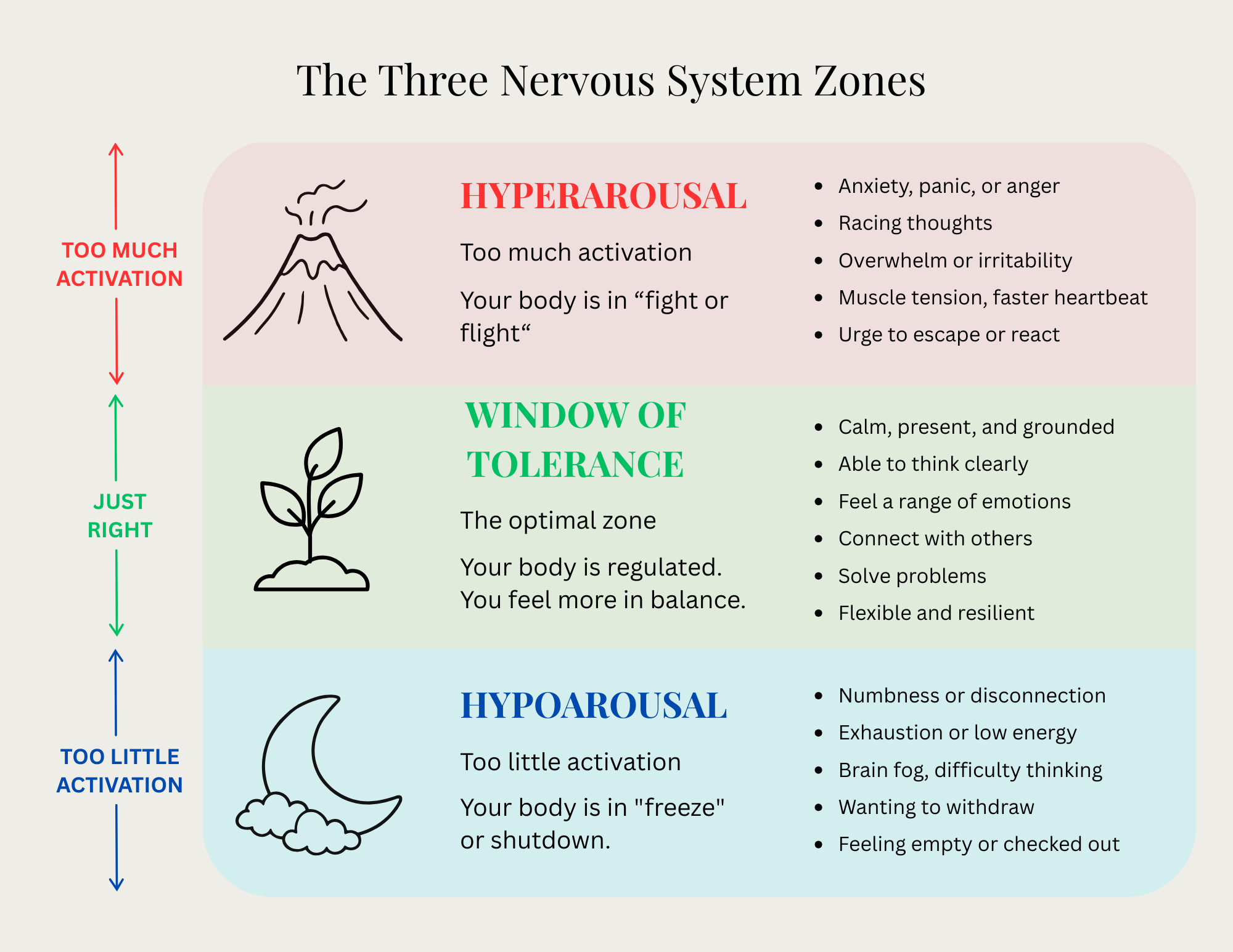





Frequently Asked Questions About Therapy for Stress
-
Burnout can result from prolonged stress, high expectations, work-related pressure, caregiving responsibilities, perfectionism, people-pleasing tendencies, or ongoing emotional demands without adequate rest or support.
-
Stress and burnout often show up as constant exhaustion, irritability, difficulty concentrating, feeling overwhelmed by small tasks, or a sense of emotional numbness. If you feel stuck in “survival mode,” depleted instead of just tired, or like rest never feels like enough, therapy can help you understand what’s happening and begin to recover.
-
Not at all. You don’t have to reach a breaking point to seek support. Many people start therapy when they notice early signs - chronic stress, difficulty slowing down, or feeling disconnected from themselves. Therapy can help prevent burnout from deepening and support healthier, more sustainable ways of coping.
-
Many people normalize stress because it’s so common - but common doesn’t mean healthy. If stress is affecting your mood, relationships, sleep, or sense of well-being, it’s worth paying attention to. Therapy offers space to explore what’s contributing to your stress and how to respond in ways that support your long-term health.
-
Sessions are a collaborative and supportive space where you can slow down and reflect. Together, you’ll explore stress patterns, expectations, and habits that may be contributing to burnout. Therapy often includes practical tools for nervous system regulation, boundary-setting, and self-care - always at a pace that feels manageable.
-
Therapy for burnout may include Cognitive Behavioural Therapy (CBT), Acceptance and Commitment Therapy (ACT), mindfulness-based approaches, stress management strategies, and emotional regulation techniques
-
Yes. While stress may not disappear overnight, therapy can help you feel more grounded, clearer, and better equipped to handle daily demands. Over time, many people notice improved energy, emotional balance, and a greater sense of control over their lives.
-
This is very common, especially for people who are caregivers, high-achievers, or used to putting others first. Therapy can help you unpack guilt around rest, challenge unhelpful beliefs about productivity, and develop a more compassionate relationship with yourself.
-
Recovering from burnout often involves slowing down, identifying stressors, setting healthier boundaries, improving coping skills, prioritizing self-care, and addressing emotional or behavioural patterns contributing to chronic stress.
Have other questions?
Get in touch with us.
Ready to Take the First Step?
A WELCOMING HOME PSYCHOTHERAPY IN TORONTO & ACROSS ONTARIO
Whether you prefer virtual sessions that fit into your busy schedule or in-person counselling sessions in Toronto, we are here to support you.
Let’s Connect!
Finding the right therapist is personal. A free consultation gives you the opportunity to ask questions, share what you’re looking for, and see if we’re a good fit.
Prefer to book directly? You can also book your first appointment online.
Contact Information
Call Us:(249)206-0429
Email us: info@awelcominghomepsychotherapy.ca

When you’re ready to feel at home within.
A Welcoming Home Psychotherapy
Reconnecting with your inner self.
Reviewed by Tianna Home - Founder, MACP, RP